AI infrastructure developments
NVIDIA DSX POD: What Remains to Install at the Site
Leviathan delivers a defined physical IT installation package for a DSX POD project: receiving reconciliation, approved IT interconnections, cable routing and labels, agreed physical checks and handoff records. Start with the selected supplier's delivery boundary and the site's authorized instructions, then assign the remaining tasks and the evidence each receiving team needs.
01
Read the announcement as a change in the work package
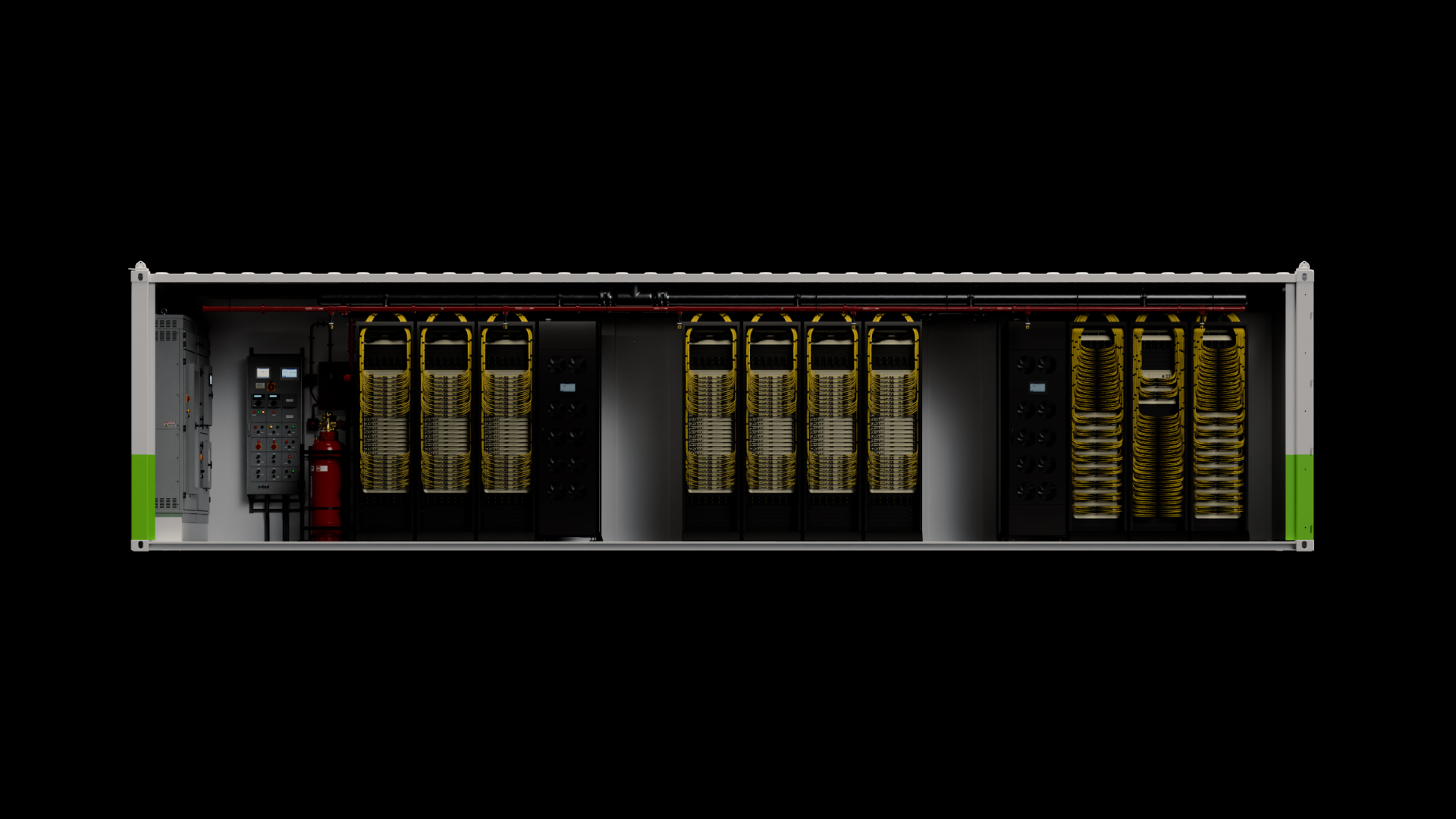
NVIDIA announced DSX POD on October 21, 2026: a partner-delivered Vera Rubin modular reference design planned for early 2027. It cites as little as 14 days at a prepared site. [N1]
NVIDIA's product FAQ still requires connections to site power, water, cooling and networking. [N2] The technical article puts rack-to-rack cabling and other integration upstream, while identifying external and inter-container connections at the destination. [N3]
The buyer's planning question is therefore specific: which physical IT tasks remain outside the selected supplier's delivered package? A proposal to rebuild everything onsite can duplicate supplied work. A proposal that lists only delivery can leave the site's IT connections without an installer. Ask for the actual boundary before pricing or scheduling either approach. Build the schedule from the selected package and its real prerequisites.
02
Draw the boundary around the selected delivery
Begin with the actual supplier offer and applicable configuration issue. Identify the delivered assemblies, their contained equipment, the internal connection records supplied with them and every interface that crosses into another party's scope. Keep a requirement still awaiting supplier confirmation distinct from a contracted inclusion. A reference-design description helps frame the questions; the selected delivery documents answer them.
For the physical IT package, ask which ports and patch points are presented to the site team, what they connect to, which assemblies and approved routes apply, and who releases the work. Distinguish customer-facing networking, management connections and other identified IT connections in the project record. A word such as networking does not identify a port or authorize a connection. Preserve factory-contained connections as supplied scope unless the actual project expressly requests and releases a change.
The existing module-purchasing guide explains how to distinguish power assemblies from IT accommodation. The Rubin readiness guide explains why an exact configuration and its interfaces matter. Here the additional decision is how the proposed DSX POD delivery divides the remaining onsite IT work between the supplier, customer and installation contractor.
| Boundary | Return to obtain | Work-package use | Source |
|---|---|---|---|
| Inside the supplied assembly | Applicable configuration and internal connection record; supplier's stated completion and evidence scope. | Identify supplied work and any expressly requested change; avoid silently charging to recreate it. | Planning analysis |
| At the site IT interface | Exact endpoint pair, approved assembly and route, source issue, access conditions and release owner. | Define the physical connection and labeling task and its required returned record. | Planning analysis |
| At another discipline's interface | Named responsible party, applicable readiness return and restrictions affecting the IT work. | Carry the dependency into the plan without assigning that discipline's work to the IT installer. | Planning analysis |
Original scoping questions. They establish no DSX POD port specification, material selection, engineering approval or universal installation sequence.
03
Scope the physical work that the next team can use
Leviathan's physical deployment and structured-cabling services cover the remaining IT work. A project can start from equipment already integrated by its supplier; the physical engagement need not begin with loose servers or a new rack build. Describe the actual starting condition and requested result so the proposal covers the work you need. [L1, L2]
Receiving coordination can reconcile expected delivery references with the agreed receiving observations, record visible discrepancies within the permitted scope and route missing information to its owner. Agree the receiving location, responsible contacts, access and staging arrangements separately from any movement or placement task. Receiving a container does not make its lifting or positioning a standard rack-and-stack activity.
For a released IT connection package, the proposed work can include installing and dressing the specified cable assemblies, applying the agreed identifiers, reconciling endpoint records and documenting authorized departures. Agree which physical checks and records the customer will receive. Formal optical and copper tests run to agreed methods and criteria and are scoped separately from labeled-cable installation. [L1, L2]
Use the existing service links below to discuss those tasks.
04
Work a twelve-record package through a supplier return
Fictional planning case DSX-IT12 defines exactly twelve IT connection-record IDs. The invented supplier allocation places F01-F06 inside its delivered package. S01-S06 are proposed site connections. These counts are assumptions for a documentary example, not a DSX POD topology, a real port population or a recommended configuration.
In issue A, the customer has complete endpoint and assembly inputs for S01-S04 but lacks the remote endpoint decision for S05-S06. All six proposed site assemblies appear on a material list. That list does not resolve the two missing endpoints: the position is six supplied-scope records, four site records with complete stated inputs and two open site records. None is yet recorded as installed or accepted.
The customer requests a specific return from the supplier and network design owner. In the fictional response, issue B supplies S05's approved endpoint and reconciles its assembly reference; S06 is explicitly deferred and remains outside the current proposed installation package. The response preserves F01-F06 as the supplier's internal scope. The updated accounting is six internal records, five site records with complete stated inputs and one deferred site record: 6 + 5 + 1 = 12.
That return gives the parties a concrete five-connection package to review for access, prerequisites, permitted tasks, resources and acceptance evidence. It does not itself release installation. If the appointed owners subsequently authorize that package, the contractor can perform its agreed physical work and return records for those five IDs. S06 remains visible for a later decision rather than disappearing from the master list. No authorization, installation, check or acceptance has actually occurred in this example.
| Record group | Issue A | Supplier/design return in issue B | Source |
|---|---|---|---|
| F01-F06: 6 records | Stipulated supplier-internal connections. | Retained as supplier scope; no duplicate onsite installation request. | Planning analysis |
| S01-S04: 4 records | Complete stipulated endpoint and assembly inputs. | Carried into the proposed site package with their applicable source issue. | Planning analysis |
| S05: 1 record | Remote endpoint decision missing despite its material-list entry. | Owner's return supplies the endpoint and reconciled assembly input; now the fifth site record for scope review. | Planning analysis |
| S06: 1 record | Remote endpoint decision missing. | Expressly deferred, with its next decision owner retained; excluded from the current five-record work package. | Planning analysis |
Twelve documentary IDs are fully accounted for. Five complete-input site records are not five released, installed, verified or accepted links. No labor duration, schedule saving, traffic direction, cable type, protocol, performance or facility-capacity result is supplied.
05
Ask each specialist for the return the IT team needs
Name the appointed site and supplier parties for container transport and placement, structural matters, facility power, cooling and system commissioning. Ask each for the applicable readiness or restriction that affects the identified IT task and work window. The IT plan needs those bounded returns, with their source issues and owners; it does not need an installer to declare another discipline complete.
Liquid-cooling installation, facility electrical and mechanical work and cluster software commissioning stay with the OEM, the facility and the platform teams. The cooling-responsibility guide below explains that allocation in more detail. [L3]
Keep those boundaries useful to the schedule. If an owner supplies a limited readiness return, identify the tasks and location it actually covers. An unresolved dependency must be returned for a real disposition; neither a supplier's arrival forecast nor a cable contractor's completed labels establishes permission to operate the system.
06
Return the destination record alongside the supplier's earlier issue
Agree the handoff before the site window. A useful physical package identifies the supplied assembly, the IT work actually performed, the applicable connection issue, recorded observations, included check evidence, authorized changes and remaining decisions. Keep the supplier's earlier configuration and any supplied factory evidence identifiable; do not rename them as observations of the destination installation.
For DSX-IT12, a later physical submission would cover S01-S05 only if that was the actual authorized and performed scope. It would identify the source issue, individual connection records and the real evidence and reviewer returns available for each. Its cover would retain S06's deferred status and owner. A receiving team could then distinguish the completed physical package from a future connection request without treating all twelve master rows as site work.
The detailed as-built handoff guide already explains record fields, exceptions and acceptance. Use it to agree the actual outputs rather than copying its entire record system into this project. A physical handoff supports the decision its evidence covers; the OEM, facility and platform teams retain their separate commissioning and operational decisions.
07
Bring a defined IT package to the installation discussion
Send a nonconfidential outline of the selected supplier/configuration, delivery boundary, site location and proposed window. Identify the receiving arrangement, requested IT connections, applicable endpoint and assembly records, appointed materials supplier, site restrictions and required handoff. List the missing returns and the party deciding each one. Arrange an appropriate channel before exchanging restricted facility or customer records.
Leviathan can then discuss receiving and preparation, approved physical IT interconnections, cabling, labels, agreed checks and documentary handoff as a defined engagement. Scope, site requirements and availability determine the work. The practical objective is a package another team can act on: known inputs, clearly assigned physical tasks and an explicit destination handoff.
08Questions
Common planning questions
Can Leviathan discuss an installation when the equipment arrives integrated?
What belongs in the first inquiry?
09Sources
Primary sources
- [N1]NVIDIA Newsroom announcement, October 21, 2026Checked 2026-10-22. Announcement lines 49-63; qualifications at lines 68-70.
- [N2]NVIDIA DSX POD product FAQChecked 2026-10-22. Current page observed on the checked date; FAQ lines 141-153. No selected supplier or site configuration is established.
- [N3]NVIDIA Technical Blog, Premal Savla, October 21, 2026Checked 2026-10-22. Authored article lines 30-99, including networking/cabling at 55-63 and destination work at 79-95. The separate AI-generated summary is not the evidence basis.
- [L1]Leviathan: Complete Physical Infrastructure DeploymentChecked 2026-10-22. Service scope for an engagement that starts from the supplied equipment's actual state.
- [L2]Leviathan: Structured Cabling and Fiber InstallationChecked 2026-10-22. Service scope for specified IT cable assemblies, routes, labels, physical checks and records.
- [L3]Leviathan: Cooling Responsibilities and IT InstallationChecked 2026-10-22. Company responsibility boundary for cooling and IT installation.
10Related
Related Leviathan resources
Compare power modules with IT accommodation
Confirm the Rubin configuration and its interfaces
Prepare the site-readiness inputs and owners
Define the physical installation handoff
Review complete physical deployment scope
Review IT cabling and connection-record scope
Read the cooling responsibility boundary
Contact
Scope the Physical IT Work Around Your Planned Delivery
Share the selected supplier, delivery boundary and requested receiving, cabling and handoff work. We will discuss the scope, requirements and availability.